
How long do dental implants last? A well-planned and properly maintained dental implant can function for decades, but no dentist can promise an exact lifespan. The implant placed in the jaw may last longer than the crown, bridge, or denture attached to it. Bone health, gum health, oral hygiene, smoking, bite pressure, general health, and restoration design all affect implant longevity.
Dental implants can function for decades with proper planning, healthy bone and gums, good oral hygiene, and regular dental care. The implant post may last longer than the crown or bridge attached to it. Smoking, gum disease, bone loss, health conditions, grinding, bite pressure, and restoration design can all affect implant longevity.
Patients considering dental implant treatment at Full Smile Dental should understand that long-term results depend on both the original treatment and the care provided afterward.
Which Part of a Dental Implant Can Wear Out?
A dental implant restoration usually contains more than one component. Each component can have a different lifespan.
- Implant body: The post placed inside the jawbone
- Abutment: The connector between the implant and restoration
- Restoration: The visible crown, bridge, or denture
The implant body may remain stable for many years while the visible restoration experiences normal wear. A crown can chip, loosen, or wear down even when the implant underneath remains healthy.
This distinction matters because replacing or repairing a crown does not necessarily mean the implant has failed.
What Do Long-Term Dental Implant Studies Show?
Long-term studies generally report high survival rates for dental implants, but results vary between patients and treatment situations. A systematic review of 10-year dental implant survival estimated an implant-level survival rate of 96.4% after 10 years.
However, survival does not mean the implant remained completely free of problems. In research, an implant may be counted as surviving as long as it remains in the mouth. A patient may still experience gum inflammation, bone loss, screw loosening, crown damage, or another complication requiring treatment.
Research percentages describe groups of patients. They cannot predict exactly how long an individual implant will last.
What Factors Affect Dental Implant Longevity?
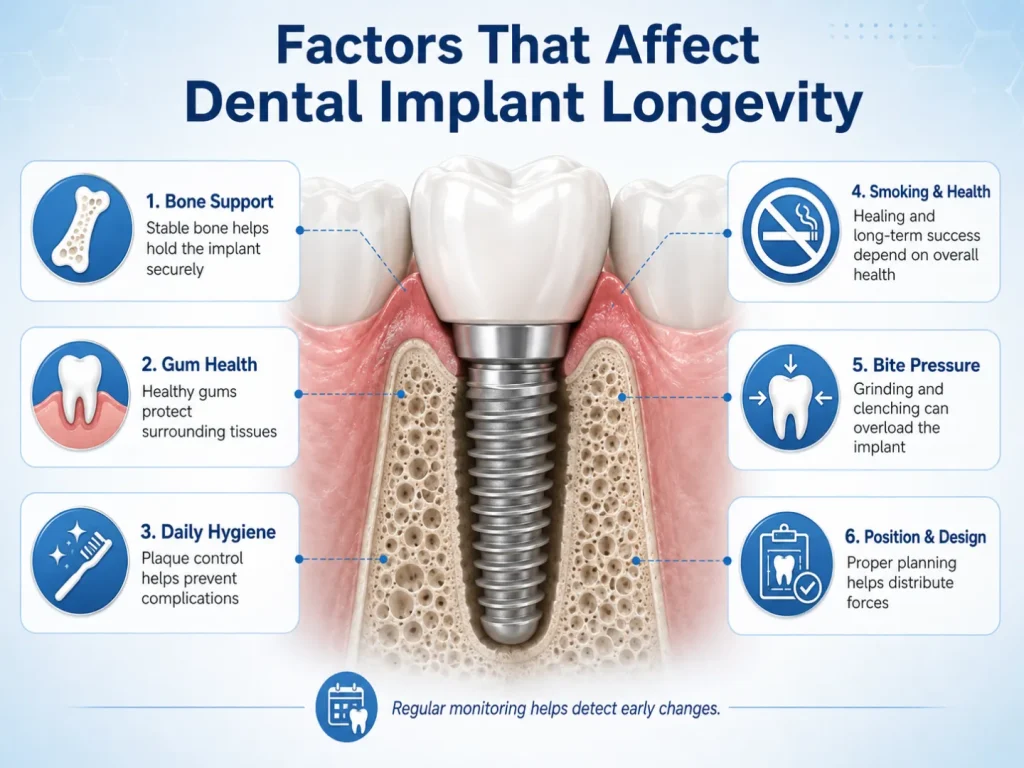
Dental implant longevity depends on the condition of the surrounding tissues, the forces placed on the restoration, and the patient’s daily habits.
Bone Support Around the Implant
Healthy bone helps hold the implant securely. After placement, the implant must integrate with the surrounding jawbone during healing.
Bone loss can weaken this support over time. It may be associated with infection, uncontrolled inflammation, excessive force, or other health and treatment factors. Regular examinations and imaging help the dental team monitor changes that may not be visible to the patient.
Gum Health and Peri-Implant Disease
Healthy gums protect the tissues around an implant. Plaque accumulation can lead to inflammation around the implant, known as peri-implant mucositis. If the inflammation progresses and supporting bone is lost, the condition may become peri-implantitis.
The American Academy of Periodontology identifies poor plaque control, smoking, diabetes, and a history of periodontal disease as risk factors for peri-implant disease.
Gum disease around an implant may not become painful during its early stages. Professional monitoring is therefore important even when the implant feels normal.
Daily Oral Hygiene
Implants cannot develop cavities, but the gums and bone around them can become diseased. Brushing, cleaning between the teeth, and cleaning around the implant restoration help control plaque.
The correct cleaning method depends on whether the implant supports a single crown, bridge, or full-arch restoration. Some patients may need floss threaders, interdental brushes, or other tools recommended by their dental team.
Smoking and General Health
Smoking can delay healing and reduce long-term implant success. The FDA’s dental implant guidance also notes that overall health, oral hygiene, smoking, and regular dental visits influence implant outcomes.
Health conditions that affect healing, immune function, or blood sugar control may also influence risk. Having a medical condition does not automatically mean an implant will fail. The condition, its control, medications, and individual treatment plan must be considered together.
Grinding, Clenching, and Bite Pressure
An implant does not have the same shock-absorbing ligament as a natural tooth. Heavy grinding or clenching can place repeated pressure on the crown, abutment, screws, and surrounding bone.
Possible consequences include worn or chipped restorations, loose screws, or changes in the bite. A dentist may recommend adjustments, a stronger restoration design, or a protective nightguard based on the patient’s bite.
Implant Position and Restoration Design
Implant position influences how chewing forces move through the restoration and into the bone. The location, angle, number of implants, available space, and design of the crown or bridge must work together.
Back teeth usually receive greater chewing forces than front teeth. A single implant crown also has different mechanical requirements from a bridge or full-arch restoration. Careful planning helps distribute these forces more appropriately.
What Are the Warning Signs of an Implant Problem?
An implant should be examined if you notice:
- Bleeding, swelling, or tenderness around it
- Gum recession or exposed implant components
- Pain during chewing
- A loose or moving crown
- A change in the way your teeth meet
- Chipping or cracking of the restoration
- An unpleasant taste or drainage near the implant
A loose crown or screw may be repairable without removing the implant. However, movement of the implant body itself requires prompt evaluation.
Protect the Long-Term Health of Your Dental Implant
Dental implants do not have a fixed expiration date, but they require lifelong care and monitoring. If you are considering an implant or have concerns about an existing restoration, request an appointment with Full Smile Dental for an individualized evaluation.
Frequently Asked Questions About Dental Implant Longevity
Can a Dental Implant Last a Lifetime?
An implant can remain functional for the rest of a patient’s life, but this cannot be guaranteed. Health changes, gum disease, bone loss, smoking, bite forces, and restoration complications can affect its lifespan.
Can a Dental Implant Get a Cavity?
The implant and crown cannot develop tooth decay. However, natural teeth beside the implant can develop cavities, and plaque can cause disease in the gums and bone surrounding the implant.
Does Age Determine How Long an Implant Will Last?
Age alone does not determine implant longevity. Gum health, bone support, healing ability, general health, hygiene, and maintenance are usually more important than a patient’s age.
Can a Failed Dental Implant Be Replaced?
Sometimes. The dentist must first determine why the implant failed and evaluate the remaining bone and gum tissue. Treatment may involve controlling infection, allowing the area to heal, rebuilding bone, or selecting another replacement option.