
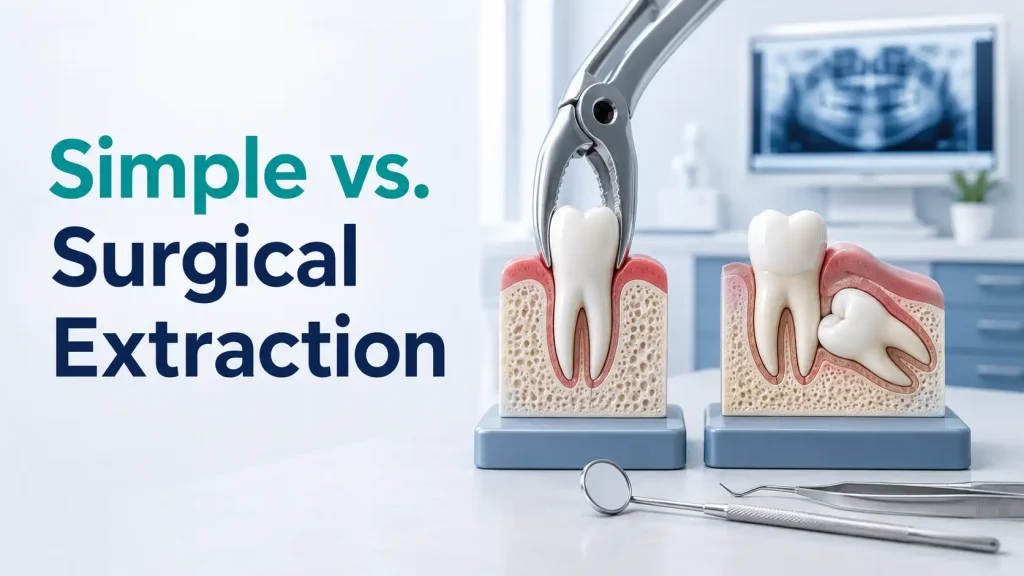
The difference between a simple vs surgical tooth extraction is access. In a simple extraction, the tooth is visible above the gumline and can usually be loosened and removed through the socket. In a surgical extraction, we may need to open the gum tissue, remove a small amount of bone, or divide the tooth into sections so it can be removed safely.
The main difference between simple and surgical tooth extraction is access. A simple extraction removes a fully visible tooth through the socket after loosening it. A surgical extraction is needed when a tooth is impacted, broken below the gumline, or has difficult roots, requiring gum opening, bone removal, or sectioning. Imaging and examination guide the choice.
You cannot reliably choose the procedure from symptoms alone. At Full Smile Dental, the tooth’s position, crown condition, root shape, surrounding bone, infection, and imaging guide the decision. A tooth that looks straightforward can have curved roots, while a broken or impacted tooth may need surgical access.
What Happens During a Simple Extraction
A simple extraction is generally used for a fully erupted tooth with enough intact structure to grasp. After numbing the area, we loosen the tooth from the ligament and expand the socket gradually with dental instruments. We then remove the tooth and inspect the site.
Common examples may include a severely decayed but accessible tooth, a loose tooth with advanced support loss, or a tooth removed for a broader treatment plan. Even when the technique is simple, we review your health history, medications, imaging, and aftercare needs before proceeding.
What Makes an Extraction Surgical
A surgical extraction provides access when the tooth cannot be removed predictably through the socket alone. We may make a small opening in the gum, uncover part of the tooth, remove limited surrounding bone, or section the tooth. Stitches may be used, depending on the site and technique.
Teeth broken near the gumline, roots left beneath the gum, impacted teeth, and teeth with difficult root anatomy are common reasons. Our tooth extraction service covers the role of evaluation and removal, while our wisdom teeth removal page addresses third molars that may be fully erupted, partly erupted, or impacted.
How We Decide Which Procedure You Need
At Full Smile Dental, we determine the extraction approach by evaluating how accessible the tooth is, its root anatomy, surrounding bone, nearby structures, and your overall dental and medical history.
Visibility and remaining tooth structure
We assess whether enough of the crown is above the gumline to apply controlled force. Extensive decay, a large filling, or a fracture can reduce the amount of stable structure available.
Root shape and surrounding bone
Dental imaging helps us evaluate the number, length, curvature, and separation of roots as well as nearby bone. Certain shapes make sectioning a tooth more controlled than attempting to remove it in one piece.
Tooth position and nearby anatomy
An impacted tooth may be covered by gum or bone, or angled against another tooth. We also consider nearby nerves, sinuses, and adjacent roots. Complex anatomy may change the plan or lead us to recommend care from an oral surgery specialist.
Your medical and dental history
Healing and bleeding risks vary with health conditions, medications, tobacco use, and prior treatment. Do not stop or change a prescription on your own. Share a complete history so we can coordinate any necessary guidance with the appropriate clinician.
Recovery Differences and Shared Aftercare
A surgical extraction often involves more tissue manipulation and may produce more swelling or a longer recovery than a simple extraction, but individual experiences vary. Both procedures require protection of the blood clot that forms in the socket. Follow the written instructions we provide for pressure, oral hygiene, food, activity, and prescribed or over-the-counter medication.
Avoid disturbing the socket with fingers or objects. Contact us if bleeding does not slow with the instructed pressure, pain worsens after initial improvement, swelling becomes severe, fever develops, or you have trouble breathing or swallowing. We tailor the urgency to your symptoms and procedure.
Planning What Comes After Extraction
Removing a tooth may solve an immediate problem, but it can create a space that affects chewing and neighboring teeth. Depending on the tooth and your goals, we may discuss a bridge, implant, partial denture, or no replacement. Our dental fillings and implant page and crown-and-bridge information can help frame that later conversation.
Get an Extraction Evaluation in Worth, IL
We can examine the tooth, review imaging, explain whether a simple or surgical approach appears appropriate, and discuss alternatives when the tooth may be saved. To arrange an evaluation, request an appointment.
Frequently Asked Questions
Is a surgical extraction always for wisdom teeth?
No. Any tooth may require surgical access if it is impacted, broken below the gumline, or has anatomy that limits simple removal.
Can imaging tell whether surgery is needed?
Imaging provides important information about roots, bone, and nearby anatomy, but we combine it with a clinical examination.
Does surgical extraction always require stitches?
Not always. The need for stitches depends on the incision, socket, and technique.
Is recovery longer after surgical extraction?
It can be, because more tissue may be involved. Your tooth, health, and procedure affect the actual course.
Can a tooth change from a planned simple extraction to surgical?
Yes. If the tooth fractures or does not loosen as expected, changing technique may provide safer, more controlled access.
Will I need to replace the extracted tooth?
That depends on the tooth’s location, chewing function, neighboring teeth, bite, and your goals. We can review replacement options after evaluation.